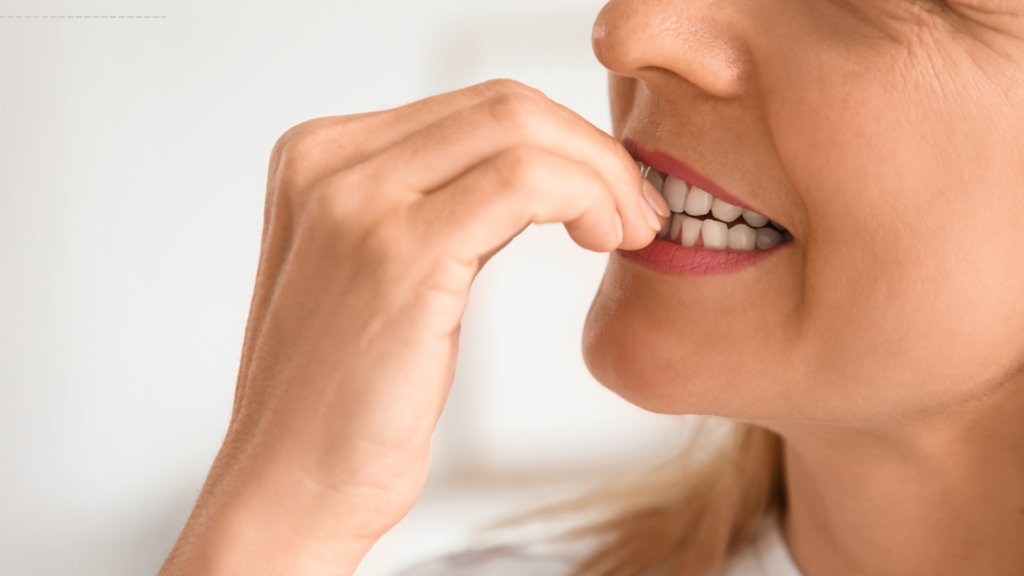

We all start young, continue through our teenage years, and then lots of people slide into adulthood with sore, chewed up nails. You may feel embarrassed when your nails look unhealthy or painful, but know that you are not alone in this struggle. Millions of people bite their nails, and everyone wants to know how to stop.
What’s frustrating is that most people don’t set out each day with the intention of biting their nails. It happens because you’re bored, stressed, anxious, concentrating on a task, or not thinking about it at all. One second you’re going about your day, and the next you’ve chewed another nail down to the quick.
The good news is nail biting is a learned habit, and like any habit, you can learn to stop. You don’t have to develop some amazing willpower or seek out expensive treatments to make a change, either. Sometimes the smallest daily shifts in your behavior can make the biggest impact.
If you are ready to quit chewing your nails and putting your fingers in your mouth today, here are ten things you can start doing.
10 Simple Things to Help You Stop Biting Your Nails
1. Pay Attention to Your Triggers
One of the biggest reasons people have a hard time quitting nail biting is because they aren’t sure what causes the behavior in the first place. Nail biting tends to happen subconsciously, so you may not realize you’re doing it until you look down and see the damage.
Pay attention to the situations where you find yourself biting. Perhaps you do it during nerve wracking meetings, while you watch TV shows, study for exams, browse through social media, or lie in bed at night. Once you identify your triggers, you can work to avoid or counter those situations before you reach for your nails.
Try leaving a note on your phone for a week or two. Anytime you catch yourself biting your nails, take a second to write down what you’re doing and how you feel. You may be surprised to discover patterns that you hadn’t noticed before. Creating this added self awareness can help you develop healthier habits to break the cycle long term.
Read also: 7 Things Your Nails Say About You and Your Health
2. Keep Your Nails Short and Trimmed
Chewed up, long nails are hard not to bite. Keeping your nails trimmed and filed properly can take away a lot of temptation before it starts. Try taking 5 minutes each week to trim down your nails and shape them properly.
Smooth out jagged edges that could catch your attention throughout the day. The less your nails look like they need fixing, the less you’ll try to use your teeth to fix them.
Another cool thing about keeping your nails trimmed is it can create motivation to keep them healthy. You may begin to feel proud of how nice your nails look, which will make you want to maintain that feeling.
Read also: 10 Grooming Tips for Women Beauty
3. Use a Bitter Tasting Nail Treatment

Sometimes simple really is better. There are nail treatments out there that leave a bitter taste on your nails. As soon as your fingers reach your mouth, you’ll be reminded why you shouldn’t do that with a nasty taste.
You can find these treatments at most pharmacies and beauty supply stores. They usually go on similarly to clear nail polish and can be reapplied as needed throughout the week.
While this won’t fix the underlying emotions that trigger your nail biting, it can create a mental association between biting your nails and an unpleasant taste. Over time, your brain will begin to crave that relaxing, comfortable feeling you once got from biting your nails. Instead, it will offer you an uncomfortable reminder to keep your fingers away.
Read also: 10 Steps to Finding Yourself Again
4. Give Your Hands Something Else to Do
Believe it or not, a lot of people bite their nails because they’re bored. Your brain is busy thinking about a million different things while your fingers are just lying there idle. Once your mouth gets involved, you’ve chewed another nail down to the nub.
Try to find something else your hands can do to stay busy. Squeeze a stress ball, play with a fidget toy, doodle in a notebook, knit, or even hold a pen when working. There are tons of options, but you’ll want to find something healthy to keep your fingers occupied.
This works especially well if you tend to bite your nails while doing certain tasks. For example, if you bite your nails while watching movies, have a stress ball ready for your other hand. Instead of replacing the behavior with hatred, you’re creating a new healthy habit to feel fulfilled by.
5. Reduce Stress Whenever Possible
Stress is probably the number one reason people bite their nails. Your mind is screaming at you from the inside while your body tries to relieve that built up tension by biting your nails.
While you shouldn’t stress about stress, there are small things you can do every day that help. Going on walks, practicing deep breathing, exercising, journaling, and getting outside can help you relax your nervous system and give yourself a break from the constant tension you’re feeling.
By creating a stress management routine, you’ll not only help your nail biting habits. You’ll improve your mood, energy, sleep quality, and overall feelings of wellness too.
Read also: 8 Ways to Stay Calm When Stressed at Work
6. Celebrate the Small Wins
A lot of people go into quitting nail biting expecting to never bite their nails again. They slip up one time and feel like complete failures.
Change doesn’t work like that. Breaking a habit is a learning process that will include good days and bad days. Celebrate small improvements throughout your journey.
Did you go all day without biting your nails? Celebrate that. One nail is starting to grow back? Celebrate that. Caught yourself biting your nails but stopped halfway through? These things may not feel like victories, but they are. You are becoming more aware of your behavior every day, and that awareness is what will eventually lead to long term success.
7. Keep Up with Regular Manicures or Nail Care

Salon manicures aren’t required, but taking care of your nails at home can help you care about them more. Make sure to clean under your nails, properly file them, and give your nails and cuticles a few drops of moisturizer too.
You’ll want to keep your nails clean and trimmed like we mentioned earlier, but taking a few extra minutes each week to care for your nails will make you want to keep them healthy. You may also want to apply some nail polish as an added reminder to stay away.
Developing a good nail care routine can help you build positive habits that keep you on track. You’ll start to view taking care of your nails as something you work hard at rather than ignoring.
8. Start with One Nail at a Time
If you’ve been biting your nails for most of your life, asking yourself to stop completely will feel impossible. Your brain wants comfort, and your nail biting habit is comfortable to you.
Start by just protecting one nail. Pick one fingernail on your hand and focus on not biting that one nail. You can even use a clear nail polish (this works as a reminder as well) to help you stay focused. Once that nail grows out, pick another one. Slowly increase how many nails you’re protecting until you have ten beautiful, healthy nails growing.
It may take some time, but instead of trying not to bite your nails at all, you’re proving to your brain you can quit one nail at a time. Each new nail that grows will be physical proof that you are capable of making this change.
9. Ask Someone for Help
The best way to catch yourself biting your nails is to have someone else watch you. Ask a friend, family member, partner, or coworker to help remind you when you’re unconsciously picking at your nails.
Make sure you ask someone who will be supportive and not tear you down. You don’t want someone who is going to guilt trip you into quitting. All you need is someone who can politely remind you and help you become more aware of what you’re doing.
Accountability can help you succeed because you have someone there to support you through the process. Occasional reminders from someone else can help you stay consistent and keep on track.
10. Be Patient with Yourself
This may be the best piece of advice for breaking any habit. Learn to be patient with yourself. Your nail biting habit didn’t occur overnight and won’t stop overnight.
You will have good days and bad days. Some days you’ll feel on top of the world, and others you’ll feel like you’ll never stop biting your nails. It happens to everyone.
Each time you become aware of your habit and make a conscious decision to do something else, you’re training your brain to make better choices. Don’t strive for perfection. Focus on being consistent with your habits, and before you know it, those small choices will add up.
You’re going to look down at your hands one day and see healthy nails you haven’t seen in years. It’s not going to happen overnight, but if you stay consistent with the small things you can start today, you will stop biting your nails.
Conclusion
Quitting nail biting isn’t about how strong your willpower is. It’s about creating enough awareness to understand your habits and make small shifts that will change your behavior for the long run.
Start by trimming your nails, using bitter nail treatments, reducing stress, or keeping your hands busy. Just pick one or two things you can start doing today and work on being consistent. Perfection is not the goal here. Learn to be patient with yourself and the process.
You’ve been biting your nails for years, so don’t expect to break the habit immediately. Your journey started today, and if you stick with these small changes, you can stop biting your nails forever.
FAQ
How long does it take to stop biting your nails?
The timeline varies from person to person. Some people notice improvement within a few weeks, while others may take several months to fully break the habit. Consistency is more important than speed.
Why do people bite their nails without realizing it?
Nail biting often becomes an automatic habit linked to stress, boredom, anxiety, or concentration. Many people do it subconsciously and only notice after they have already started.
Do bitter nail treatments really work?
They can be very effective for many people because they create an unpleasant taste that interrupts the habit. While they may not address emotional triggers, they can help increase awareness and reduce nail biting.
Can adults stop biting their nails after doing it for years?
Yes. Nail biting is a learned habit, and learned habits can be changed. Many adults successfully stop by combining awareness, patience, and simple habit replacement strategies.
What should I do if I relapse and start biting my nails again?
Treat it as part of the learning process rather than a failure. Identify what triggered the behavior, refocus on your chosen strategies, and continue building healthier habits without being overly critical of yourself.
Save the pin for later