
I did my research. I read blogs and comments from frazzled parents who had done their homework. But something became clear after scouring dozens of preschool packing lists.
Many of the situations that upset children during the school day aren’t actual emergencies. Instead, they’re small problems that become big because kids don’t have what they need when they need it.
You know…the small scares that fade away when you place a bandage on a scraped knee. The tears that stop rolling when you apply lotion to dry skin. The uncomfortable moments that improve once your child trades dirty clothes for clean ones.
Teachers do their best to prepare for these moments, but there are only so many individual changes of clothes in the faculty closet. By providing your child with an emergency kit for preschool, you can help teachers help your child.
We created this list of 18 essential emergency kit items to help parents make life a little easier for children (and teachers!) during the school day.
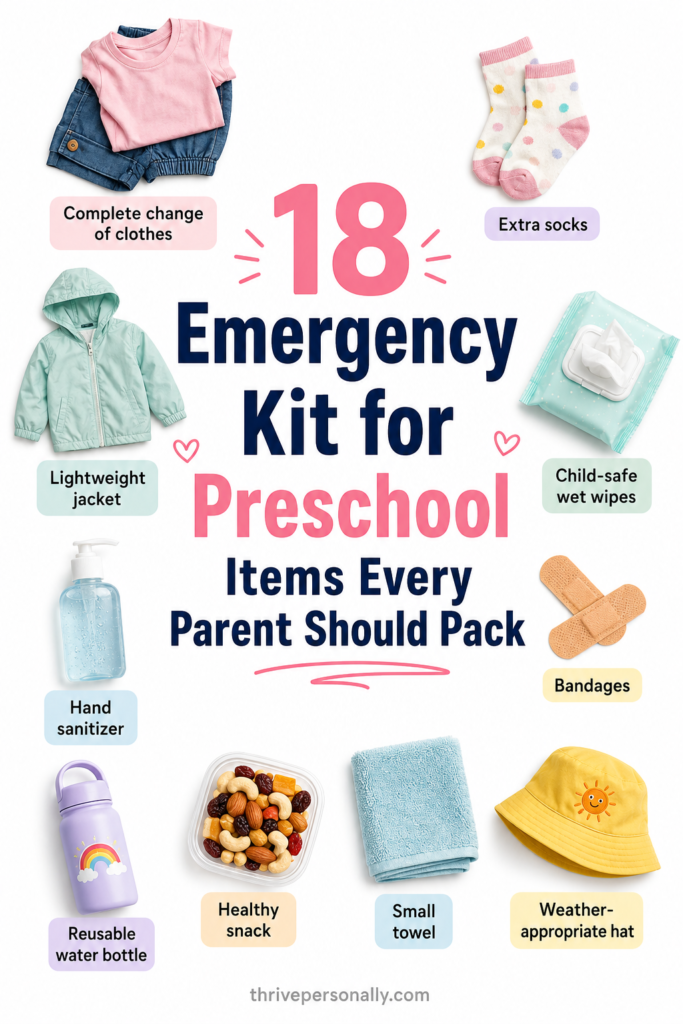
18 Emergency Kit for Preschool Items Every Parent Should Pack
1. Complete Change of Clothes
It’s true that teachers have extra clothes at school. However, your child’s individual kit should include a complete set of clothes as well.
Preschoolers get messy. They paint, play outside, jump in puddles on rainy days, spill drinks, and more. Having a full set of clothes in their emergency kit ensures that sudden messes don’t ruin your child’s day.
Pack a zippered plastic bag with a shirt, pair of pants, underwear, and socks. Label the bag with your child’s name and make sure the clothing is seasonally appropriate and fits well.
Read also: 6 Essential Things to Do Before School Starts
2. Extra Underwear
Every parent hopes their child is fully potty trained before starting preschool. But accidents happen. Even older preschoolers can lose track of their bathroom routine when they’re busy playing.
An extra pair of underwear can make all the difference between a stressful morning and one that’s quickly forgotten. Pack at least two pairs for maximum comfort.
3. Extra Socks
Parents always remember the outfit. But what about socks? Having wet socks can ruin your child’s entire day.
Your little one will get wet socks from outdoor play, spilled water, or by stepping in puddles. A few extra socks in their emergency kit will keep your child comfortable.
Purchase breathable socks that fit easily over your child’s feet. Ones that your child can easily slide on and off by themselves are even better!
Read also: 10 Back to School Ideas Preschool Parents Need to Try This Year
4. Lightweight Jacket or Sweater
Parents often focus on how warm their children will be when leaving for school. But once the classroom doors open, temperatures can change.
Teachers open windows to cool the room. Outside temperatures can drop unexpectedly. Or your child might spend extra time playing outside.
Pack a lightweight jacket or sweater to keep your child comfortable throughout the day.
5. Small Pack of Tissues
Runny noses are inevitable. Stock your child’s emergency kit with a small pack of tissues so they can stay clean and comfortable.
Teachers will appreciate your child having easy access to something they can use to wipe up germ filled sniffling.
Read also: 65 Motivational Back-to-School Quotes Every Student Needs to Read
6. Child Safe Wet Wipes
Wet wipes are amazing. Not only can your child use them to clean sticky hands or wipe messy faces, but they can also remove dirt from outside activities and spills.
Pack a travel sized pack of wet wipes in your child’s emergency kit. Your preschooler will thank you!
7. Hand Sanitizer
Handwashing is always preferred, but let’s be honest…there are times when sinks aren’t available.
Pack a travel sized bottle of child safe hand sanitizer to use after outdoor activities or before meals. Check with your preschool first to ensure it’s allowed.
8. Bandages
We’ve all heard the saying, “All you need is a bandage and a hug.” Children love bandaids!
Including a few adhesive bandages in your child’s emergency kit will help them feel better fast. It works wonders for emotional wounds, too.
9. Reusable Water Bottle
Water bottles are another necessity. Children who drink water regularly have an easier time focusing, learning, and playing.
Pack a reusable water bottle in your child’s emergency kit. Stay away from bottles with lightweight lids that can leak or pop off without warning.
10. Healthy Emergency Snack
Check with your preschool program to see if they allow parents to send emergency snacks.
If they do, include a healthy snack that your child enjoys eating. You never know when they’ll need it. Maybe they missed lunchtime due to an unexpected delay, or they simply played harder than normal and need an extra boost.
Nut free snacks are typically preferred for allergy purposes.
11. Small Comfort Item
Preschool is a lot to handle, especially for younger children. Sending a small comfort item with your child may help them overcome big emotions.
Look for small family photos, soft cloth material, or any other comfort item your preschool allows. It can also be very helpful for children who recently started at your preschool.
Reminder: The goal is not to create attachment, but to provide comfort when they may need a little extra reassurance.
12. Emergency Contact Information
Most preschool teachers already have your contact information. But it doesn’t hurt to include an extra copy in your child’s emergency kit.
Copy down phone numbers for parents and backup contacts. Add any additional information requested by your preschool.
13. Plastic Storage Bags
Plastic storage bags can be used for a variety of reasons. Use them to store wet clothing, dirty clothes, art projects, damaged school supplies, or any other contents in your child’s emergency kit that may get messy.
Pack several small and large bags for maximum usefulness.
14. Small Towel
You may wonder why a towel is on this list. Towels are versatile!
They can dry hands, clean up spills, wipe muddy boots, or offer temporary comfort after outdoor activities. This towel can be used over and over again, unlike tissues.
Pick a small towel that will easily fit in your child’s emergency kit.
15. Lip Balm
Dry lips are uncomfortable. Pack a small tube of lip balm to keep your child comfortable on those dry winter days.
Again, check with your preschool program first. Some schools don’t allow children to have personal care items in their possession.
16. Weather Appropriate Hat
Preschool teachers know how important outdoor play is for children. Hats can help keep your child warm during cold days and protected from the sun on warmer days.
Weather discomfort can spoil your child’s mood. Having a hat on hand will help teachers keep your child comfortable no matter the weather.
Bonus points for labeling the hat with your child’s name.
17. Spare Face Mask (If Required)
Face masks may not be necessary for most children, but if your preschool or child requires one, place a spare mask in your child’s emergency kit.
Teachers can offer a clean backup mask to your child if theirs becomes damaged or dirty throughout the day.
Keep the mask in a sealed bag until it’s needed.
18. Medication and Medical Instructions
If your child has allergies, asthma, or another condition that requires medication, make sure the appropriate medication is in your child’s emergency kit.
Include written instructions and communicate with your child’s teacher directly about any additional needs your child may have.
Conclusion
This completes our list of preschool emergency kit items. Hopefully, you understand the importance of having these items in your child’s emergency kit.
Teachers do their absolute best to provide for children during these situations. But since there are limited resources, your child’s personal emergency kit allows them to provide for YOUR child when those situations arise.
Hopefully, you see emergency kits as one more way to prevent the what if moments from lingering any longer than necessary. Your child will spend less time upset and more time learning, playing, and creating unforgettable memories.
FAQ
What is an emergency kit for preschool?
An emergency kit for preschool is a bag or container full of items that can help your child during unexpected moments throughout the day.
Why does my preschooler need an emergency kit?
Because preschoolers fall, spill, get messy, and explore every wonderous thing the world has to offer!
During these adventures, children will sometimes experience uncomfortable situations that teachers can easily fix with the right supplies.
An emergency kit for preschool allows teachers to quickly send your child back to class without causing too much disruption to their day.
How often should I update my child’s preschool emergency kit?
Every few months is a great time to check on your child’s kit. This allows you to verify that everything still fits, replace used items, and update contact information.
Seasonal changes are the perfect time to review your child’s emergency kit, too.
What should not be included in a preschool emergency kit?
Items that your preschool program does not allow. Each school has different rules and regulations about what children can and cannot have in their possession.
Can I personalize my child’s emergency kit?
Yes! Every child is different. If there are specific comfort items, hygiene products, or medications that you believe will help your child, feel free to include them.
Where should the preschool emergency kit be stored?
Most schools have a special area to store children’s emergency kits. Ask your child’s teacher or administrator where they prefer these bags to be stored.
What is the most important item in a preschool emergency kit?
A change of clothes. Children get messy. Teachers are prepared for messy children. But by sending an extra set of clothes in your child’s emergency kit, you’re giving teachers one less thing to worry about.
Save the pin for later