
There is something I’ve come to appreciate about healthy relationships. Arguments are almost inevitable, but they don’t have to create distance.
Sometimes, they reveal areas where communication needs to improve. The questions you ask after emotions have settled can make the difference between repeating the same conflict and growing stronger together.
If you and your boyfriend have recently argued, these deep questions can help you move past the tension, understand each other better, and rebuild trust through honest conversation.
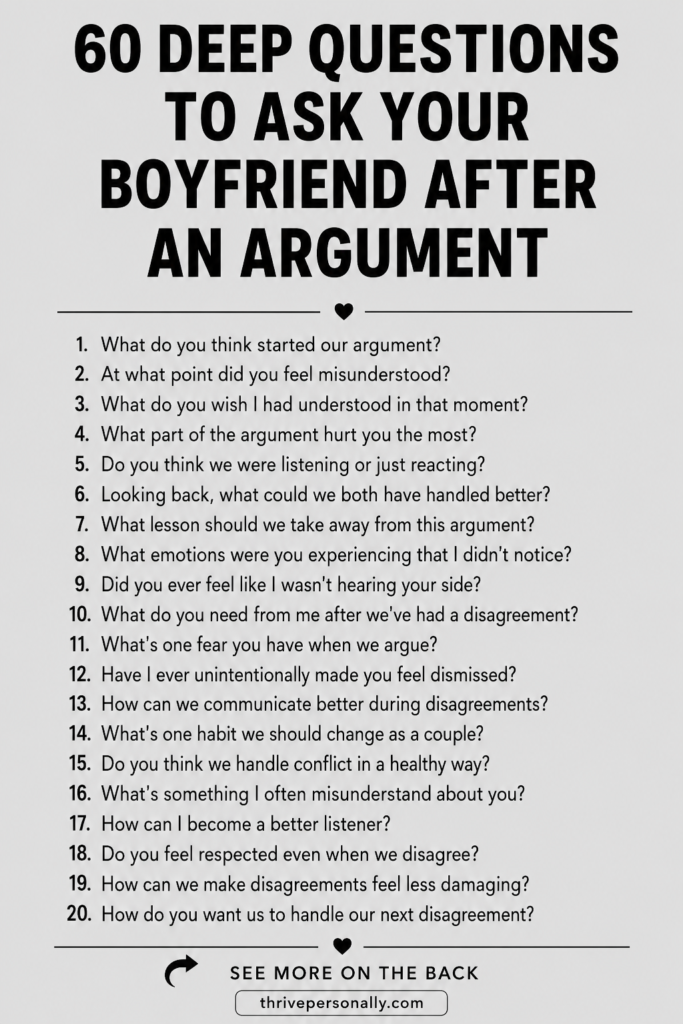
60 Deep Questions to Ask Your Boyfriend After an Argument
1. Questions About the Argument
- What do you think started our argument?
- How did you feel during our disagreement?
- At what point did you feel misunderstood?
- Do you think either of us assumed something that wasn’t true?
- What do you wish I had understood in that moment?
- Was there something you wanted to say but couldn’t?
- What part of the argument hurt you the most?
- Do you think we were listening or just reacting?
- Is there anything you wish you had said differently?
- Looking back, what could we both have handled better?
- What lesson should we take away from this argument?
- Do you feel like the issue has actually been resolved?
Read also: 55 Thoughtful Questions to Ask Your Boyfriend After Work
2. Questions About His Feelings
- What emotions were you experiencing that I didn’t notice?
- Did you ever feel like I wasn’t hearing your side?
- Is there something you’ve been holding in for a while?
- What makes you feel emotionally safe with me?
- When do you feel the most appreciated in our relationship?
- What do you need from me after we’ve had a disagreement?
- Do you find it easy or difficult to express your feelings?
- What’s one fear you have when we argue?
- Have I ever unintentionally made you feel dismissed?
- What helps you calm down after conflict?
- Do you think we understand each other’s emotions well?
- Is there something you’ve wanted to tell me but haven’t?
Read also: 99 Ragebaiting Questions to Ask Men That Will Start Wild Debates
3. Questions About Your Relationship

- What do you love most about our relationship?
- What do you think we’re doing well as a couple?
- What’s one area where we could grow together?
- Do you feel emotionally supported by me?
- How can we communicate better during disagreements?
- What’s one habit we should change as a couple?
- What makes you feel closest to me?
- When do you feel most loved by me?
- What’s something you never want us to lose?
- Do you think we handle conflict in a healthy way?
- What’s one thing you admire about our relationship?
- How can we prevent similar arguments in the future?
Read also: 50 Weird Questions to Ask Your Boyfriend During Truth or Dare
4. Questions About Trust and Understanding
- Is there anything that’s been bothering you lately outside our relationship?
- Do you ever feel afraid to be completely honest with me?
- What’s something I often misunderstand about you?
- How can I become a better listener?
- Do you feel respected even when we disagree?
- What’s one thing you wish I noticed more often?
- How do you define trust in a relationship?
- What’s one promise we should make to each other after this?
- Is there anything you’ve forgiven me for that I’ve never thanked you for?
- What helps you feel emotionally connected again after conflict?
- What’s one thing I do that instantly reassures you?
- How can we make disagreements feel less damaging?
5. Questions About the Future
- What kind of relationship do you want us to have a year from now?
- What’s one goal you’d like us to work toward together?
- How can we make communication one of our strengths?
- What’s one tradition we should start as a couple?
- What does a healthy relationship look like to you?
- How can we better support each other during stressful seasons?
- What’s one quality you hope we both continue developing?
- What would make our relationship even stronger?
- How do you want us to handle our next disagreement?
- What’s one thing you’re excited about in our future together?
- What’s something you hope we always protect in this relationship?
- After everything we’ve talked about, what’s one thing you want us to remember moving forward?
Why Deep Questions Matter After an Argument

Once emotions settle, honest conversations can accomplish far more than trying to “win” an argument. Deep questions encourage both of you to slow down, understand each other’s perspectives, and identify the real issue instead of focusing only on what was said in the heat of the moment.
These conversations also build emotional intimacy. When your boyfriend feels safe enough to explain his thoughts without fear of being criticized or interrupted, trust grows naturally. Likewise, you gain a clearer understanding of his needs, concerns, and communication style.
Remember that healing doesn’t happen because an argument ends—it happens because both people are willing to understand each other afterward.
Tips for Having a Productive Conversation
Choose the right time. If either of you is still angry, it’s usually better to wait until you’ve both had a chance to calm down. A thoughtful conversation is much more productive when emotions aren’t running high.
Listen with the goal of understanding rather than preparing your next response. Sometimes your boyfriend may simply want to feel heard before discussing solutions. Giving him that space can completely change the tone of the conversation.
Finally, don’t be afraid to acknowledge your own mistakes. Healthy relationships aren’t built on perfection—they’re built on humility, accountability, and a willingness to grow together.
Every couple disagrees from time to time. What separates strong relationships from struggling ones isn’t the absence of conflict but the way conflict is handled. When both partners choose curiosity over blame, arguments become opportunities to strengthen the relationship instead of weaken it.
Asking meaningful questions after a disagreement helps you move beyond surface-level apologies and address the emotions, expectations, and misunderstandings that caused the conflict in the first place.
With patience, honesty, and mutual respect, even difficult conversations can bring you closer than you were before the argument began.
Conclusion
Arguments don’t have to create lasting distance between you and your boyfriend. When approached with empathy and a genuine desire to understand each other, they can become valuable opportunities for growth and deeper connection.
These 60 deep questions to ask your boyfriend after an argument are designed to encourage meaningful conversations, rebuild trust, and help both of you move forward with greater understanding. Sometimes, the strongest relationships are built not by avoiding conflict but by learning how to communicate through it.
FAQ
When should I ask my boyfriend these questions?
It’s best to wait until both of you have calmed down and are ready to have a respectful conversation. Trying to ask deep questions while emotions are still high may lead to more misunderstandings.
Why are deep questions important after an argument?
They help uncover the emotions and concerns behind the disagreement, making it easier to resolve the issue and strengthen your relationship.
Should I ask all 60 questions in one conversation?
No. Choose the questions that feel most relevant to your situation. A few meaningful questions often lead to a more natural and productive discussion than asking too many at once.
What if my boyfriend doesn’t want to talk right away?
Respect his need for space. Let him know you’re ready to listen whenever he feels comfortable having the conversation.
Can these questions help prevent future arguments?
They can. Honest discussions about communication, expectations, and feelings often help couples recognize patterns and develop healthier ways of handling disagreements in the future.
Save the pin for later